Top 10 Tips In Reporting And Documenting PAT in East Midlands
The Portable Appliance Testing documentation and reports are tangible proof that the Electricity at Work Regulations (1989) are being adhered to by the duty holder. It's not the test as such that is crucial, but the report. This is the way inspections from the Health and Safety Executive and other stakeholders, like insurance assessors and auditors, can confirm the duty of care. In the event of an electrical fire, thorough and thorough documents are your best defense. It will prove that you have a risk-based, well-organized maintenance program in place. The IET Code of Practice sets out the guidelines for ensuring adequate records. These go beyond simple passes/fails to include assets registers and certificates of conformity and risk assessment. Documentation is not just an administrative afterthought but an integral part of the safety process providing trend analysis, forming the future risk assessment, and providing an audit trail that is clear starting from the first inspection to any remedial action that are taken.
1. The PAT Testing Certificate (Report of Testing and Inspection) in East Midlands
This is the document you must provide as the first step after you have tested. It should be comprehensive, and not a simple one-page summary. A certificate that is compliant must include the following data: the name of the company, details about the company, and qualifications of the test subjects, date of the testing, address of premises as well as a list of appliances that were tested, (with their unique identification number) and the results of all tests (visual inspection and electronics tests), pass/fail status of each item and recommended date for next inspection. It must also be signed by an experienced person.
2. The Asset Register: the Foundation of Documentation
Asset registers are a primary document used to monitor the lifespan of portable devices. It must contain at the very least, a unique number that identifies the asset (which is similar to the physical label of the appliance), an item description as well as its East Midlands, class (Class I/II) as well as a description of the type (e.g. handheld, stationary) along with the model and serial number, manufacturer, and an exhaustive description. A high-quality register will also contain a history of every test, date, and remedial measures implemented. This will provide a comprehensive audit of each asset.
3. Failure Reports for Appliances as well as Corrective Action Documentation in East Midlands
Failures must be documented. Documentation is essential to be able to clearly trace the whole life-cycle of the issue. This should include a failure report describing the nature of the fault (e.g. failure in the earth bond test 1.8O) and the immediate steps performed (e.g. the appliance was marked FAIL and was removed from service and disconnected) and a record of the authorization procedure to repair or disposal. After the issue has been resolved, the report must show the re-test results as well as the date that the item was returned to service, closing the loop, and proving that the risk was properly controlled.
4. Labels and on Asset Identification
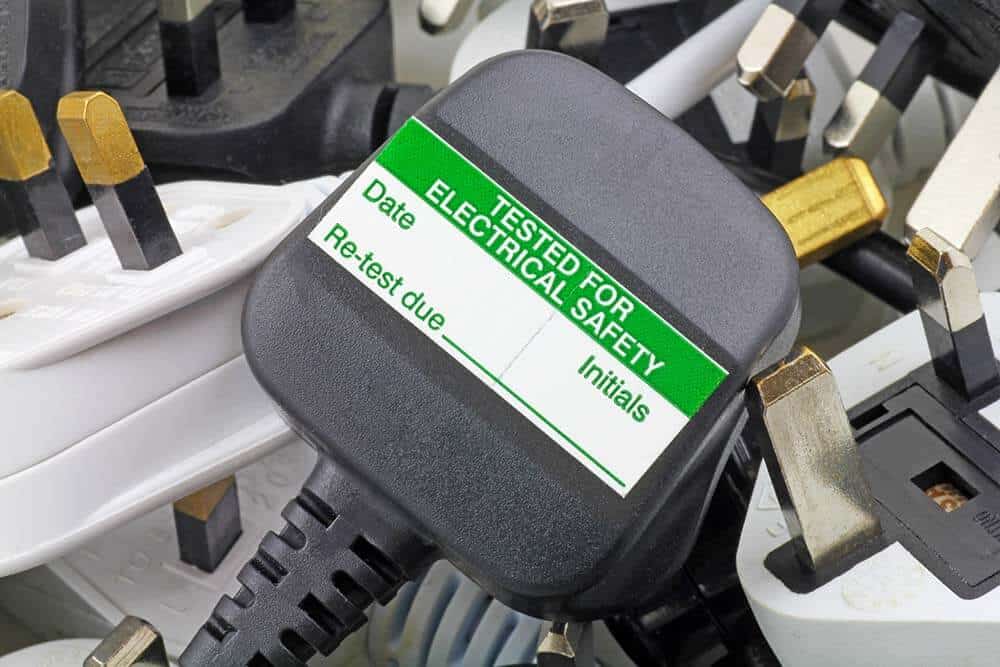
Labels that are attached to the appliance itself are vital to the process of documenting. Each label should be durable non-conductive, non-metallic, and non-conductive. It should clearly show the unique Asset ID, date it was tested the test, the tester's ID or the company name, as well as the date of the next inspection. Labels serve as a visual indication to both users and inspectors of the level of compliance. The information on the label has to precisely match the information on the asset register as well as the certificate.
5. Risk Assessment Documentation
A risk assessment that is documented must determine the frequency and types of testing. The report should be element of every PAT documents. It should record the results that are made, including the type and conditions of the equipment used, user competency as well as the rationale behind selecting the intervals for inspection and testing. This document demonstrates a risk-based, smart approach to testing as opposed to a blanket unsubstantiated policy.
6. Evidence of Competence, Insurance and Certificate of Competence in East Midlands
The documentation should contain evidence of the tester's expertise. It is crucial to keep the originals of any relevant certifications, such as City & Guilds (2377), and proof of public liability insurance. While not a direct document of testing the test, supporting documentation is crucial since it can be used to validate the entire procedure. It shows an enforcement authority that the duty holder has taken reasonable steps to choose an experienced person.
7. Certificates of calibration of Test Equipment
The reliability and accuracy of the PAT tester is a determining factor in the credibility of any electronic test. This is why a UKAS-accredited calibration certificate is required for every test device. This certificate, which is usually renewed annually, indicates that the results of the test instrument could be traced to national standards at testing time which confirms the accuracy and reliability of the pass/fail decisions that were made.
8. Digital Reporting Systems and Online Portals
The business has moved towards digital management as a best way to manage. Numerous providers offer an online portal for their clients. Customers can log on to their online portal, view and download their current and historic certificates, as well as report on their operations 24 hours a day. It's far superior to traditional paper-based systems. It reduces the risk of losing data and makes it simpler to locate records during audits, provides an encrypted permanent record and is easier to access. This type of system is a sign of a professional provider.
9. Long-term Records Storage and Data Security
There isn't a specific duration of the PAT's statutory retention records, but under civil law, claims for injuries are allowed for up to three years. Prudent practice is to retain the full documentation–including certificates, asset registers, and risk assessments–for at least the lifespan of the appliance or for a minimum of 5-7 years. Documentation must be stored safely, whether on physical or digital platforms to ensure data security and accessibility.
10. The Role of Documentation in Audit and Enforcement in East Midlands
The document is the first thing that will be asked in the event of an HSE Inspection or Insurance Audit an electrical accident. The documentation is what proves that the duty of diligence was performed. Incomplete, incorrect or unreliable documents could lead to enforcement measures (e.g. improvements notices) or invalidated claims for insurance or, in the worst case scenario, criminal prosecution. Documentation isn't just about keeping records; it's an essential part of a company's legal defense. Follow the top East Midlands portable appliance testing for more advice.
Top 10 Tips For Customer Support In Fire Extinguisher Servicing in East Midlands
Support for customers is an essential component in the highly regulated area of fire safety. It extends beyond the traditional service interactions and becomes the most important element to ensure the compliance with legal requirements and risk management. According to the Regulatory (Fire Safety) Order of 2005, a provider's ability to provide customer service directly affects their ability to maintain continuous compliance, to manage documents efficiently, and to react to safety issues. A high-quality customer support system functions as the central nerve system for the contract for service, coordinating scheduling, managing emergencies, interpreting compliance requirements, and ensuring an excellent audit trail. It is the difference in having a single supplier conduct annual audits versus an authentic partner who shares your responsibility for fire safety. Evaluating support structures–including communication channels, account management, technical expertise, and problem-resolution protocols–is therefore essential for selecting a provider who can deliver not just technical competence but comprehensive peace of mind.
1. dedicated account management vs. General Call Centre Access
Customer support should be organized. A dedicated account model gives you a designated person to contact who understands your particular requirements, as well as the background of your building, and how it was built. The person in charge of your account is familiar with your contract and can assist you in resolving problems, schedule inspections, or respond to queries swiftly without needing to repeatedly explain what's going on. General call centres, which have you speaking to different agents on a regular basis is more likely to cause communications breakdowns or information overload. They also lead to lack of accountability. Account managers are not a luxury for companies with multiple sites and complex requirements. They are essential.
2. Multi-Channel Support Accessibility and guarantees for response times in East Midlands
Modern customer support systems has to offer multiple channels of communication to meet the diverse requirements and preferences of customers. This includes direct phone support along with email and a 24/7 online portal to view the service histories and documents. Importantly, every channel should be accompanied by a clearly-defined Service Level Agreement (SLA) for responses. An email response could be guaranteed within two days, or calling the help desk within 30 minutes in office hours. These promises are quantifiable and stop questions from disappearing into the space. They will also ensure compliance-related issues are addressed promptly.
3. Technical Support Services and Advisory in East Midlands
Support from a customer service representative that is of the highest level offers more than administrative assistance. They also offer guidance on compliance and technical issues. Your contact person can help you with the most difficult questions about British Standards BS 5306-3, advise on the best type of extinguisher for an emerging risk or provide assistance in understanding the recommendations provided by an Fire Risk Assessment. Support staff should be trained and regularly updated on regulatory changes in order to be able to offer this service. The support function is transformed from a simple scheduling tool into an effective tool to fulfill your responsibilities as a Responsible person.
4. Digital Customer Portals Online and Document Management in East Midlands
A robust, online portal is a sign of a forward-thinking service provider. This platform should allow you to access your complete service history immediately, 24 hours a day seven every day of the week, in addition to your asset register and invoices. This platform should permit you to report any issues, schedule visits that aren't urgent, and view the upcoming service deadlines. This digital transparency empowers you to control your compliance documentation easily and gives you the ability to access your documentation immediately during a Fire Authority audit or insurance inspection, eliminating frantic searches for paper records.
5. Communications and service reminders in East Midlands
Support that is exceptional is proactive and not reactive. The support provider will notify you of upcoming service dates, usually between four and six weeks in advanced and assist you with the process of booking. They should also proactively alert you to regulatory changes that might affect your equipment or maintenance schedule. Additionally, following an engineer's visit, support should promptly send out the report of service and highlight any action required from you (e.g., approving an upgrade unit) making sure that no detail is left unnoticed and that compliance is maintained continuously.
6. Procedures for Escalation and Complaints Management in East Midlands
An open and formal complaints procedure is a crucial indication of a properly run organization. The steps of the process must be documented and clearly defined, beginning with a basic report before moving on to the complaints manager, who can escalate the issue to senior management if required. The procedure should contain clearly specified timelines for acknowledgements and resolutions. A company that is transparent in its complaints process shows that it is confident in its ability to solve disputes fairly. It sees complaints as opportunities to improve instead of criticisms.
7. Clarity in Billing and Administrative Support in East Midlands
Support for customers should include transparent, clear and efficient administrative and billing support. The support team must be able to respond to billing inquiries quickly, clarify the details of invoices, and also clarify contract terms. The team should be able to send clear, detailed invoices that are in line with the work that is formally certified by the report of service. The confusion around billing is among the main causes of client frustration. Support staff who is courteous and quick to respond is essential for a long-lasting relationship.
8. Customer Feedback Loops (CRF) and Continuous Improvement Mechanisms
A provider who is committed to excellence has formal mechanisms that collect and use customer feedback. It's more than simply soliciting feedback. It is a structured survey after significant interactions with service providers, regular reviews of performance of the business in relation to SLAs, as well as tangible evidence that shows that customer feedback has resulted in improvements to service. This feedback loop system that is closed loop shows that the company is devoted to the relationship with you and is committed to evolving its service based on the real-world experience of its customers.
9. Train and empower support staff in East Midlands
The amount of training and support given to employees determines the performance of a support team. Support staff require extensive training not just on the firm's internal procedures but also the fundamentals of fire safety regulations and British Standards. Additionally, they should have the capacity to take important decisions without the need of approval from multiple management levels. For example they can approve a replacement for an extinguisher. This empowers them to achieve faster resolution times and a responsive, agile service.
10. Cultural Fit and Quality of Interaction in East Midlands
In the end, the often overlooked aspect of cultural fit is essential. The team must be welcoming, professional, PATient, and understanding, all while being aware of the pressure Responsible People are under when it comes to complying. The manner in which interactions are handled, the willingness and ability to build rapport and the manner in which they are delivered, all determine the experience for customers. A provider whose support team is pleasant to work with greatly eases the administrative burden of managing the compliance of fire safety. Take a look at the recommended East Midlands fire extinguisher service for more recommendations.